
For finished-product buyers
FRP profiles & products catalog
Browse fiberglass profile families, compare product forms and prepare dimensions, materials and quantities for a factory quotation.
Online buyer edition · 9 product families · Updated 2026-11-01
PDF: 2023 factory edition · 9 pages. Export enquiries: inquiry@pultrx.com.
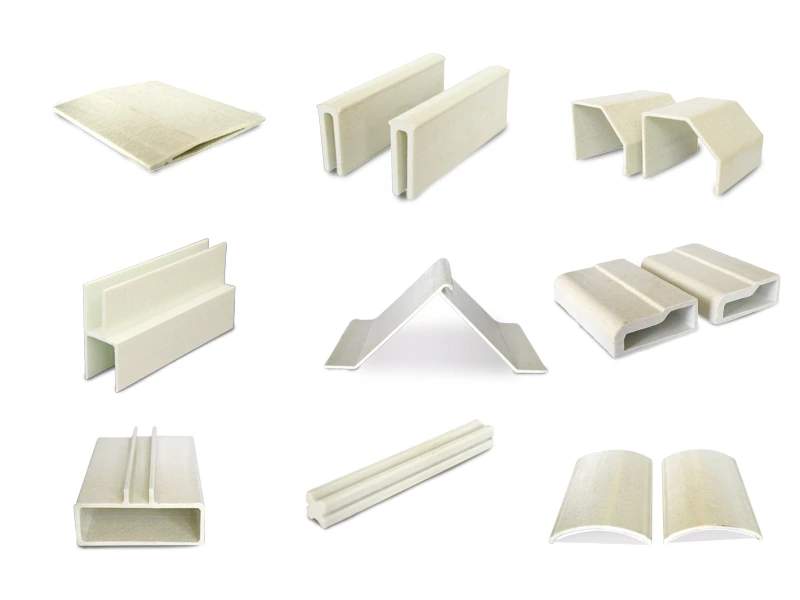
How to use this buyer edition
Start with the finished section you need to buy. Compare the product forms below, then define dimensions, service conditions and order quantities. A listed form is a starting point for a drawing-based quotation; material properties and acceptance criteria belong to the quoted product.
Compare the complete section and its intended use before comparing unit prices. Agree whether cutting, drilling, assembly and special packaging are included. Structural and code-related requirements need project-specific evidence; a family name alone does not establish performance.
Chapter 01
Fiberglass tubes
Fiberglass tubes are hollow glass fiber reinforced polymer sections, also called glass fibre or GRP tubes. The manufacturer lists round, square, rectangular and oval forms. Choose a section by its dimensions and service requirements, then request the material specification and inspection evidence for the quoted product.
Product forms
- Round tubes
- Square tubes
- Rectangular tubes: published width 25–100 mm; second side requires confirmation
- Oval tubes
Selection questions
Define the bore. Show internal clearance and mating inserts as well as outside dimensions. Specify which faces control assembly fit.
Describe the service. State exposure, temperature and loading. Ask for evidence supporting any chemical, electrical or structural requirement.
Include in your enquiry
- Section drawing and dimensional units
- Cut lengths and quantities by size
- Resin or service-environment requirements
Acceptance focus: Measure outside size, bore and wall at agreed locations.
Chapter 02
Fiberglass rods
Fiberglass rods are solid composite sections. Henan Zhongsheng lists round and square rods alongside stakes and flexible flag rods. These catalogue forms serve different purposes; specify whether the order needs rigidity, repeated bending or a simple dimensional fit, and agree the relevant test instead of assuming interchangeable performance.
Product forms
- Solid round rods: 6, 12 and 25.4 mm catalogue examples
- Solid square rods
- Plant-support stakes
- Flexible flag rods
Selection questions
Separate geometry from flexibility. A matching diameter does not establish the required bend response. Describe the installed shape and any repeated movement.
Specify ends and surfaces. Show tip shapes, caps or attachments. Confirm finish requirements where rods will be handled or fitted into sleeves.
Include in your enquiry
- Rod diameter or cross-section drawing
- Lengths, quantities and end details
- Rigid or flexible application requirements
Acceptance focus: Measure diameter or side dimensions and cut length.
Chapter 03
Fiberglass flat strips and boards
Fiberglass flat strips provide a rectangular section, while boards and panels may include shaped edges or other section details. The manufacturer category includes strips, composite deck, wall panels and utility markers. Request a drawing for the particular product rather than inferring its construction from the family name.
Product forms
- Fiberglass strips
- Composite deck boards
- FRP wall panels
- Flat utility markers
Selection questions
Specify the whole section. Show ribs, edge joints and any hollow regions. Overall width and depth alone cannot define a board.
Agree flatness checks. State sample support, measurement length and acceptance limits. Identify the visible face and any requested surface texture.
Include in your enquiry
- Full section and cut-length schedule
- Thickness, width and flatness requirements
- Quantity by board or strip size
Acceptance focus: Measure width and thickness at agreed positions.
Chapter 04
FRP structural profiles
FRP structural profiles are shaped composite members used as components in engineered assemblies. The manufacturer lists I-beams, channels, angles and T-profiles. Section geometry is only part of selection: specify the required material properties, loading direction, environmental exposure and connection design before accepting a section for the project.
Product forms
- I-beams: 1½ × 3, 2 × 4, 3 × 6 and 4 × 8 in width × height examples
- Channels
- Angles
- T-sections
Selection questions
Define the engineering basis. Provide span, supports and load cases to the responsible designer. Request product data tied to the quoted material.
Check the connections. Identify bolt holes, bearing faces and mating sections. Agree machining tolerances separately from overall section tolerances.
Include in your enquiry
- Section drawings and member schedule
- Lengths and quantities by member mark
- Design requirements and required test methods
Acceptance focus: Measure flange, web and overall section dimensions.
Chapter 05
FRP sheet piles
FRP sheet piles are interlocking composite wall elements. The manufacturer publishes a Type U section measuring 420 mm wide, 120 mm deep and 4 mm thick. Use this as a catalogue starting point, then request section data, interlock details and project-specific engineering review for the proposed wall.
Product forms
- Type U FRP sheet pile: 420 × 120 × 4 mm catalogue example
Selection questions
Confirm the offered section. Require a controlled section drawing and identified reinforcement and resin. Check whether published dimensions include the interlock and establish effective wall coverage.
Define wall performance. Provide site conditions and the engineered wall arrangement. Ask for section data and interlock details supporting the design.
Include in your enquiry
- Wall layout and required section drawing
- Pile lengths and quantity schedule
- Ground, water and service conditions for design review
Acceptance focus: Check section dimensions and cut lengths.
Chapter 06
Fiberglass grating
Fiberglass grating is an open composite flooring or platform component. The manufacturer lists molded grating, pultruded grating and stair treads. The selected construction, panel orientation and supporting structure must match the intended use. Request the applicable span and load evidence for the quoted panel rather than relying on a generic family claim.
Product forms
- Molded grating: separate panel specification
- Pultruded I-bar grating: 25.4 or 38.1 mm height examples
- Pultruded T-bar grating: 50.8 mm height example
- Grating stair treads
Selection questions
Provide the support plan. Mark support spacing, bearing edges and cutouts. Identify the loading direction for the proposed panel.
Specify the walking surface. Describe footwear, liquids and cleaning conditions. Ask for a finish proposal and any required slip or fire test evidence.
Include in your enquiry
- Panel layout and support spacing
- Panel dimensions, openings and cutouts
- Loads and permitted deflection from the designer
Acceptance focus: Check panel size, depth and opening geometry.
Chapter 07
GFRP rebar
GFRP rebar is glass fiber reinforced polymer reinforcement specified for a concrete design. The manufacturer category includes reinforcing bars in several catalogue styles and GFRP mesh. Submit the engineer-approved reinforcement schedule and required qualification evidence; the category does not establish equivalence to steel or approval for a particular code.
Product forms
- GFRP reinforcing bars
- Catalogue bar styles 01 and 05
- GFRP rebar mesh
Selection questions
Use the design schedule. Identify the governing project specification and required property values. Request evidence traceable to the offered bar.
Define surface and shape. Show the required bar surface and any formed pieces. Resolve fabrication and handling requirements before ordering.
Include in your enquiry
- Approved bar or mesh schedule
- Diameter convention and surface requirements
- Project specification and required test methods
Acceptance focus: Verify bar identification and diameter measurement basis.
Chapter 08
Custom FRP profiles
Custom FRP profiles are specified around a particular cross-section and end use. Henan Zhongsheng lists radome profiles and ladder rungs among its custom products. These examples identify product forms, not universal radio-frequency, electrical or structural qualifications. Provide the operating requirements so the proposed section and material can be reviewed together.
Product forms
- Radome and antenna-cover profiles
- Ladder-rung profiles
Selection questions
State the functional requirements. For a radome, define the required RF assessment; for a rung, identify assembly and test requirements. Ask for applicable evidence.
Control design changes. Assign drawing revisions and agree sample approval, tooling charges and rights to supplied design files.
Include in your enquiry
- Controlled drawing and mating-part details
- Service environment and functional requirements
- Quantity, lengths and secondary operations
Acceptance focus: Verify drawing revision and critical dimensions.
Chapter 09
Polyurethane pultruded profiles
Polyurethane pultruded profiles use a two-component PU resin injected at the die instead of a polyester or vinyl ester dip bath. The higher fiber content and tougher matrix allow thinner walls and sharper corners than polyester pultrusion. Henan Zhongsheng lists solar module frames, window profiles, floor beams and ladder rails among the PU profiles it runs on its own lines, and cuts the PU dies in its die shop. Specify the section by drawing, state the service environment and ask for the material specification and test evidence for the quoted product.
Product forms
- Solar (PV) module frame profiles
- Window and door frame profiles with multiple chambers
- Floor beams and deck support beams
- Ladder rails and ladder side-rail channels
- Custom PU sections to drawing
Selection questions
Decide whether PU is needed. PU pays off for thin walls, sharp corners, high stiffness and screw retention. For a plain tube or channel a polyester or vinyl ester profile is usually the cheaper answer; ask for both if unsure.
Plan the die and the injection. A PU section needs its own die with injection ports and the matching preform guides. Tooling charges, ownership and the injection unit are stated separately in the quotation.
Include in your enquiry
- Controlled drawing with wall thicknesses and chamber layout
- Service environment, stiffness and thermal requirements
- Quantity, lengths and secondary operations
Acceptance focus: Verify drawing revision and critical dimensions.
From reading to quotation
Prepare a finished-product enquiry
- Dimensioned section drawing with units, cut lengths and tolerances.
- Resin, reinforcement, color and surface requirements, or the service conditions needed to select them.
- Quantity by section and length, delivery destination and required delivery date.
- Required tests, sample approval, inspection records and packing instructions.
Use the worksheet to record requirements and open questions. Final dimensions, performance, supply scope, commercial terms and acceptance requirements are confirmed in the quotation and approved documents.
Manufacturer PDF edition
2023 factory edition · 9 pages · 2.60 MB. The PDF is a separate manufacturer edition; use the current online specifications and written quotation to resolve open requirements.
Download FRP products catalog PDF