
Skip to content
pultrx

Application · Updated 2026-11-07

FRP profiles for water and wastewater treatment

Water and wastewater plants replace steel and aluminum with pultruded fiberglass wherever parts sit in or over treated water, hydrogen sulfide or chlorine: walkway grating, handrails, weir plates, scum baffles, launder covers, stop logs, flume and channel covers. The profiles come from a few families; the specification sets the resin, surface and load. This page maps the products to the plant areas.

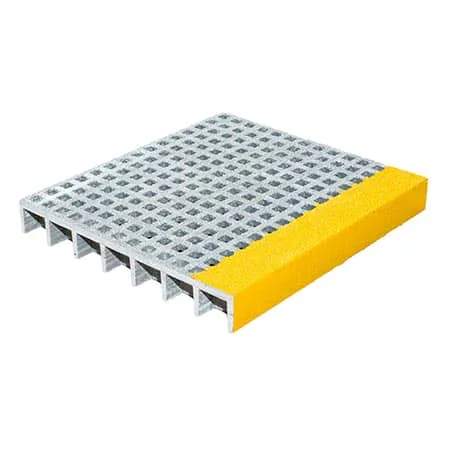
Yellow fiberglass grating stair tread with a contrasting nosing

Buying products for this application? Each family below links to its specification page. Running or planning a pultrusion line for these products? Jump to make these products on your own line.

At a glance

FRP profiles for water and wastewater treatment in brief

Wastewater plants use fiberglass grating and handrail for walkways over basins, flat FRP sheet for weir plates, scum baffles and launder covers, structural sections for cover framing and equipment supports, and GFRP rebar in new concrete tanks. Buyers specify the resin (usually vinyl ester for chemical areas), the grating load and surface, the sheet thickness and flatness for weirs, UV protection and the hardware. pultrx quotes these products from the Henan Zhongsheng factory to the plant drawing.

Products
Fiberglass grating, Flat strips and boards, Fiberglass tubes, FRP structural profiles, GFRP rebar, Custom FRP profiles
Also searched as
fiberglass grating wastewater, FRP weir plates, FRP baffles, fiberglass clarifier components, FRP tank covers
Made by
Henan Zhongsheng Composite Material Co., Ltd., Muye District, Xinxiang, Henan, China
Sold by
pultrx, Shanghai, China: the factory’s directly affiliated export trading company and exporter of record
Supply basis
Sections, panels and bars made to the project drawing or a catalogue form; design, loads and code compliance stay with the project engineer.
Pricing
Quotation only, by drawing and quantity; FOB Chinese port by default, CIF or DAP on request.

Product families

Products used in this application

Each card opens the product page with its forms, specification questions and RFQ checklist.

Order requirements

What to specify

Put these items on the RFQ so the factory quotes the same product the project drawing describes.

  1. 01Plant area and exposure: raw sewage, aeration, chlorine contact, sludge, chemical dosing, outdoor.
  2. 02Resin system: vinyl ester for chemical areas, isophthalic polyester elsewhere; fire-retardant grade where covers are indoors.
  3. 03Grating: type, thickness, panel size, bar direction, surface, design load and support condition.
  4. 04Weirs and baffles: sheet thickness, notch pattern, flatness tolerance, edge finish and the slotted-hole pattern for adjustment.
  5. 05Covers: span, live load, odor-control sealing, lifting handles and hatches.
  6. 06UV protection for outdoor parts; color for identification.
  7. 07Hardware material and whether cutting, notching and drilling are done at the factory.

Standards and documents

Documents buyers cite

Named so the RFQ can refer to them. Citing a standard does not establish that a quoted product conforms to it; conformity, tests and evidence are agreed in the quotation.

Plant specification
Most treatment plants are designed to a consultant specification that fixes the resin, surface and loads for FRP items. Attach the relevant section to the RFQ.
ASTM E84
Flame spread test required where FRP covers and grating are installed inside buildings; request the report for the quoted resin.
ASTM D7957 and ACI 440.11
Specification and design code for GFRP rebar in concrete; cite them for new tank reinforcement where the project applies them.

Where FRP replaces metal in a treatment plant

  • Clarifiers: weir plates, scum baffles, launder covers and the handrail on the bridge.
  • Aeration basins and oxidation ditches: walkway grating, handrail, diffuser supports.
  • Filters and contact tanks: grating, covers, stop logs and gates.
  • Chemical dosing and sludge areas: platforms, stairs, pipe supports and splash guards.
  • Headworks and screens: channel covers and odor-control enclosures.
  • New concrete tanks and channels: GFRP rebar where chloride or sulfide attack on steel is expected.

Resin choice by exposure

Isophthalic polyester serves most wet areas; vinyl ester is specified where chlorine, hydrogen sulfide, acids or dosing chemicals are present, and for anything submerged in raw sewage. Fire-retardant grades apply to indoor covers and grating. The resin selection guide describes the systems; the plant specification decides which applies to each area.

Weir plates and baffles

Weir plates are flat FRP sheet with V-notches or rectangular notches cut to a flatness tolerance so the overflow is even around the tank. Scum baffles are plain sheet. Both are supplied in lengths with slotted holes for height adjustment and jointed with FRP or stainless splice plates. State the notch geometry, the thickness, the flatness and the hole pattern on the RFQ.

For manufacturers

Make these products on your own line

The dies, machines and planning guides for a factory that wants to pultrude these products itself. The same factory that makes the profiles builds the dies.

FAQ

Questions buyers ask

Which resin should wastewater FRP use?
Vinyl ester is the usual choice for submerged and chemical-exposed parts; isophthalic polyester for walkways, handrail and covers in less aggressive areas. The plant specification normally states the resin by area; quote to it.
Can weir plates be supplied cut and notched?
Yes. Send the notch pattern, spacing, plate thickness, length and the hole pattern. The quotation states the flatness tolerance and the machining included.
Is fiberglass grating suitable over chlorine contact tanks?
Vinyl ester grating with a sealed surface is commonly specified there. State the chlorine exposure on the RFQ so the quoted resin and surface match.
Does pultrx also supply GFRP rebar for new tanks?
Yes. GFRP rebar is quoted by bar schedule against ASTM D7957 or the project specification; see the rebar product page and the comparison guide for the design code position.

Send the profiles for water and wastewater treatment drawing or schedule. Get a scoped quotation.

Every quotation names the manufacturer, the exporter of record and the warranty party, and lists what is included.