
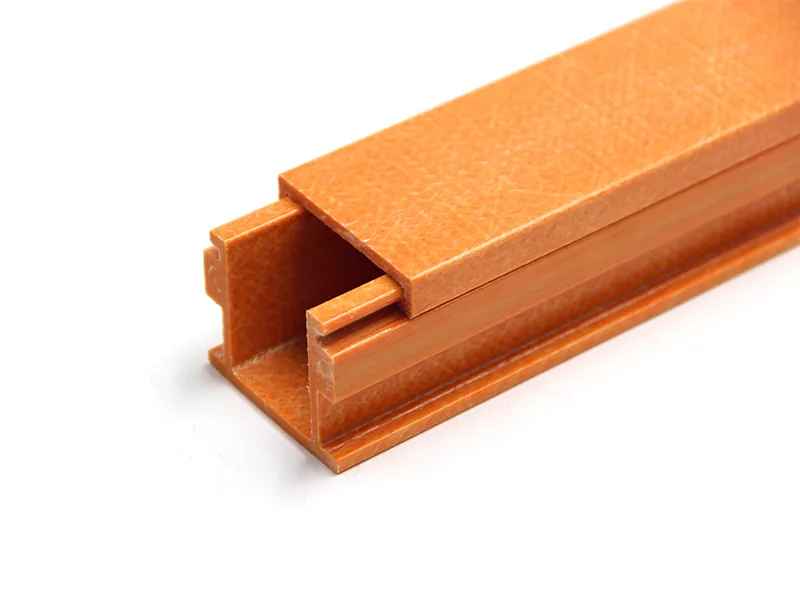
Ladder tray, trough tray and solid-bottom tray
Ladder tray uses two side rails joined by rungs at a fixed pitch, usually 150, 225 or 300 mm. Trough tray adds a ventilated or solid bottom between the rails. Solid-bottom tray and cable trough are closed sections, often with a lid, used where cables need mechanical protection or where dust must be kept out. All three can be built from pultruded profiles; the side rail is the part that carries the load and defines the tray family.
Why fiberglass instead of steel or aluminum
Fiberglass tray does not corrode in chemical or coastal atmospheres, does not conduct electricity and does not need bonding jumpers for continuity, and weighs about a quarter of steel tray of the same size. The trade-off is stiffness: FRP side rails deflect more than steel for the same depth, so support spans are shorter or rails are deeper. The FRP vs steel guide gives the material values.
What the profile supplier needs
A section drawing or channel size for the side rail, the rung section and length, the quantity per length, the resin and UV requirement, and the fittings list. If the tray maker already has a proprietary side rail, the custom FRP profiles page explains how a die is made for it and what the trial record covers.