
Skip to content
pultrx

Application · Updated 2026-11-07

FRP profiles for cooling towers

Cooling towers keep structural members wet, warm and exposed to treated water. Pultruded FRP profiles are specified for columns, beams, bracing, fill supports, stair stringers, handrails and grating because glass fiber and thermoset resin do not corrode in that service. This page lists the product families used, what to put on the order and which documents buyers cite.

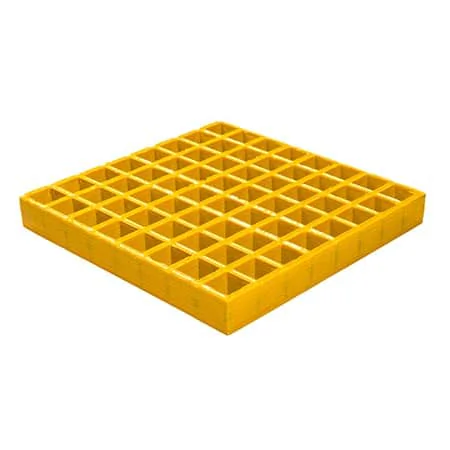
Yellow molded fiberglass grating panel with a square mesh, as used for cooling tower decks and walkways

Buying products for this application? Each family below links to its specification page. Running or planning a pultrusion line for these products? Jump to make these products on your own line.

At a glance

FRP profiles for cooling towers in brief

Cooling tower structures use pultruded FRP I beams, channels, angles and square tubes for framing and bracing, with fiberglass grating for decks and stair treads and round or square tubes for handrails. Buyers specify the section, resin system, fire-retardant requirement and connection details per the tower design, and cite CTI STD-137 where the project requires it. pultrx quotes these products from the Henan Zhongsheng factory in Xinxiang against the project drawing.

Products
FRP structural profiles, Fiberglass I beam, Fiberglass channel, Fiberglass angle, Fiberglass square tube, Fiberglass grating, Custom FRP profiles
Also searched as
pultruded cooling tower structure, fiberglass cooling tower components, FRP cooling tower framing, GRP cooling tower profiles
Made by
Henan Zhongsheng Composite Material Co., Ltd., Muye District, Xinxiang, Henan, China
Sold by
pultrx, Shanghai, China: the factory’s directly affiliated export trading company and exporter of record
Supply basis
Sections, panels and bars made to the project drawing or a catalogue form; design, loads and code compliance stay with the project engineer.
Pricing
Quotation only, by drawing and quantity; FOB Chinese port by default, CIF or DAP on request.

Product families

Products used in this application

Each card opens the product page with its forms, specification questions and RFQ checklist.

Order requirements

What to specify

Put these items on the RFQ so the factory quotes the same product the project drawing describes.

  1. 01Section dimensions and lengths from the tower drawing, with the quantity per mark.
  2. 02Resin system: isophthalic polyester, vinyl ester or phenolic, and whether a fire-retardant grade is required.
  3. 03Surface veil and UV protection for members outside the casing.
  4. 04Flame spread requirement, usually a test report to ASTM E84 for the quoted product.
  5. 05Hole patterns, cut-to-length and any pre-drilling the fabricator wants done at the factory.
  6. 06Grating type, bar direction, panel size, surface and the design load per the deck.
  7. 07Inspection and documentation: material data, dimensional inspection and batch test reports for the quoted product.

Standards and documents

Documents buyers cite

Named so the RFQ can refer to them. Citing a standard does not establish that a quoted product conforms to it; conformity, tests and evidence are agreed in the quotation.

CTI STD-137
Cooling Technology Institute standard for pultruded FRP structural products used in cooling towers. Cite it when the tower specification requires it; whether a quoted product meets it is agreed in the quotation.
ASTM E84
Surface burning characteristics test often required for members inside the casing; request the report for the quoted resin system.
EN 13706
European specification for pultruded structural profiles; grade E23 or E17 may be specified as a buyer requirement.

Why FRP is used in cooling tower structures

A cooling tower structure is constantly wet, often warm, and in contact with biocides, scale inhibitors and in some plants seawater. Timber rots and needs treatment; galvanized steel loses its zinc layer and then corrodes; stainless steel is costly. Pultruded fiberglass profiles are inert to most treated water, do not need coatings and weigh roughly a quarter of steel, which simplifies lifting inside the tower. The comparison guides on this site put the material numbers side by side.

Where each product goes

  • Columns and beams: I beams and square tubes, sized by the tower engineer.
  • Bracing: angles and channels bolted with FRP or stainless hardware.
  • Fill supports: channels or custom hangers carrying film or splash fill.
  • Decks and stairs: fiberglass grating and stair treads with a non-slip surface.
  • Handrails: round or square tubes with FRP or stainless fittings.
  • Louvers and drift eliminator frames: custom sections from a drawing.

What stays with the tower designer

Section sizes, connection design, deflection limits and fire requirements come from the tower designer and the plant specification. pultrx supplies the sections to that specification and the material and dimensional evidence agreed in the quotation. Catalogue examples on the product pages identify forms; they are not a design approval.

For manufacturers

Make these products on your own line

The dies, machines and planning guides for a factory that wants to pultrude these products itself. The same factory that makes the profiles builds the dies.

FAQ

Questions buyers ask

Which resin should a cooling tower profile use?
Most tower specifications call for isophthalic polyester or vinyl ester with a fire-retardant additive and a surface veil. Phenolic is specified where the plant requires low smoke. State the resin and the flame spread requirement on the RFQ; the quotation names the resin system supplied.
Can pultrx supply the whole FRP structure for a tower?
pultrx quotes the profiles, grating and tubes from the factory's product families, cut to length and drilled where agreed. Structural design, fabrication drawings and site assembly stay with the tower contractor.
Does the factory certify profiles to CTI STD-137?
No blanket conformity is claimed. If the project requires CTI STD-137 or EN 13706, state it on the RFQ and agree the tests and evidence for the quoted product in the quotation.
What should the RFQ include?
A marked-up drawing or a schedule of sections with lengths and quantities, the resin and fire requirement, surface veil, drilling, grating loads, inspection requirements and the destination port.

Send the profiles for cooling towers drawing or schedule. Get a scoped quotation.

Every quotation names the manufacturer, the exporter of record and the warranty party, and lists what is included.