
Match the resin to the chemical
There is no single chemical-resistant profile. Isophthalic polyester handles many dilute acids and salts; vinyl ester is chosen for stronger acids, alkalis and oxidizers and for higher temperature; some solvents attack both. The resin maker's chemical resistance guide gives a rating by chemical, concentration and temperature. Send the exposure list with the enquiry so the proposed resin can be checked against that guide before a price is compared.
Where the sections go
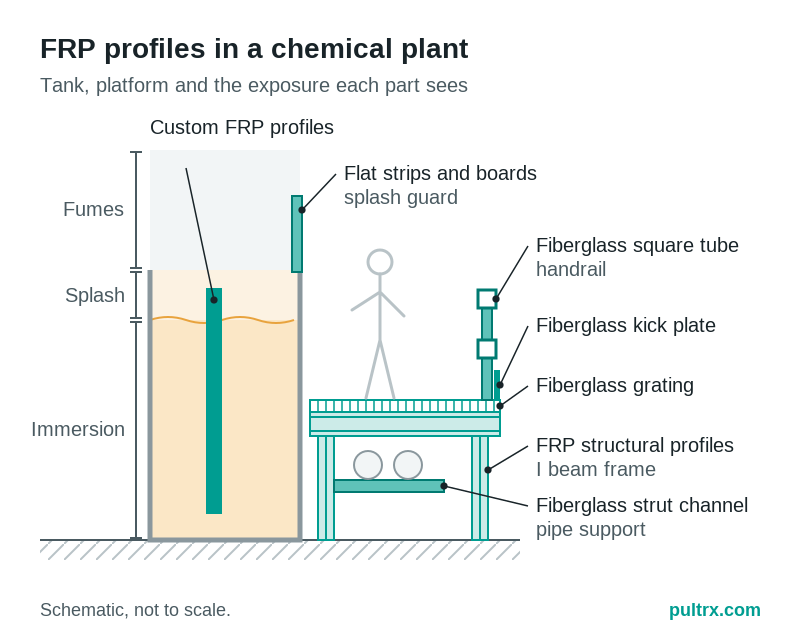
- Operating platforms, stairs and handrails around tanks and reactors.
- Pipe racks and cable tray supports along process lines.
- Trench covers and floor grating in plating and pickling areas.
- Scrubber and cooling tower internals.
- Fencing, guards and covers around dosing equipment.
Cut edges and drilled holes
A pultruded section has a resin-rich surface and a veil that keep chemicals away from the glass. Cutting and drilling expose fiber ends. In wet chemical service, cut edges and holes are sealed with a compatible resin; say on the RFQ whether the factory or your fabricator does this. The cutting and joining guide covers tools and sealing.